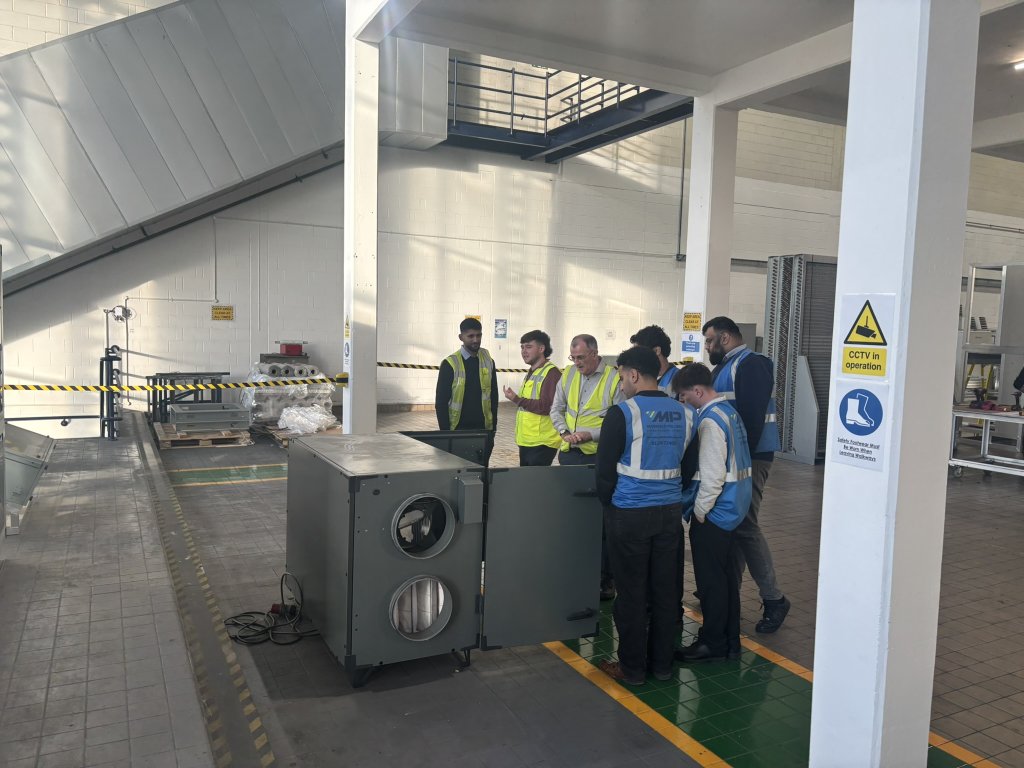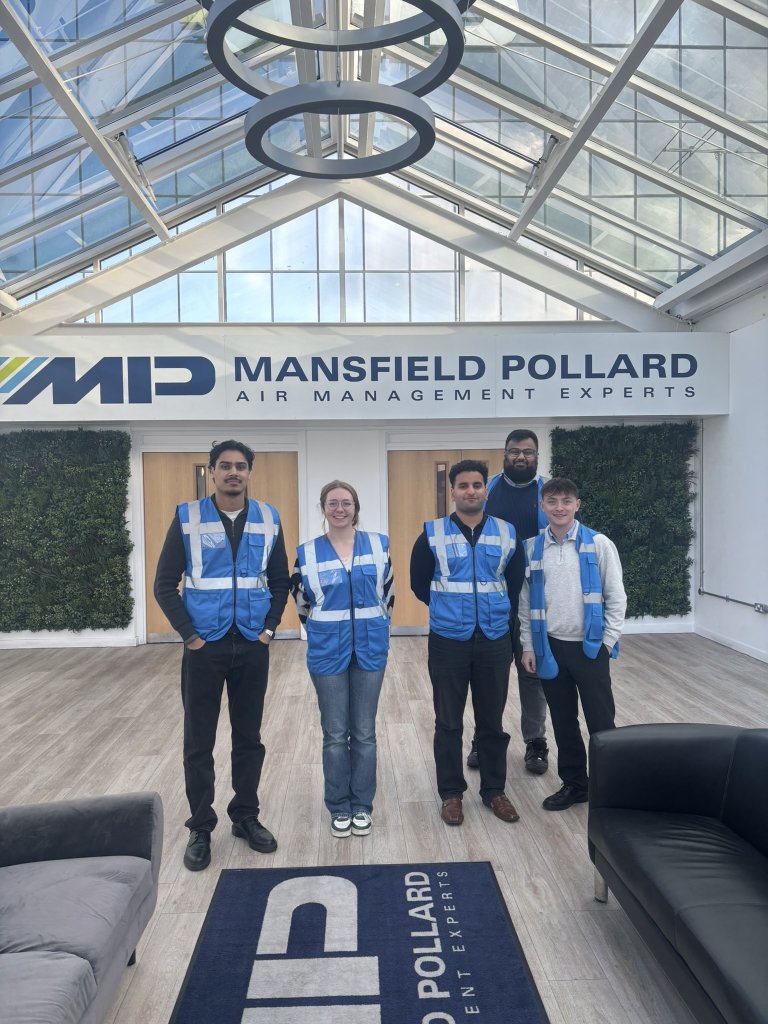
CAD21 apprentices get hands-on experience building air handling units at Mansfield Pollard.
Engineers can spend their entire career without ever seeing inside a live air handling unit. Once the doors are sealed and the system is running, the opportunity is gone. To help our apprentices understand AHU component arrangements and specifications, Charlotte Barrington, our Senior Mechanical Engineer from the Yorkshire Office, took them to see for themselves.
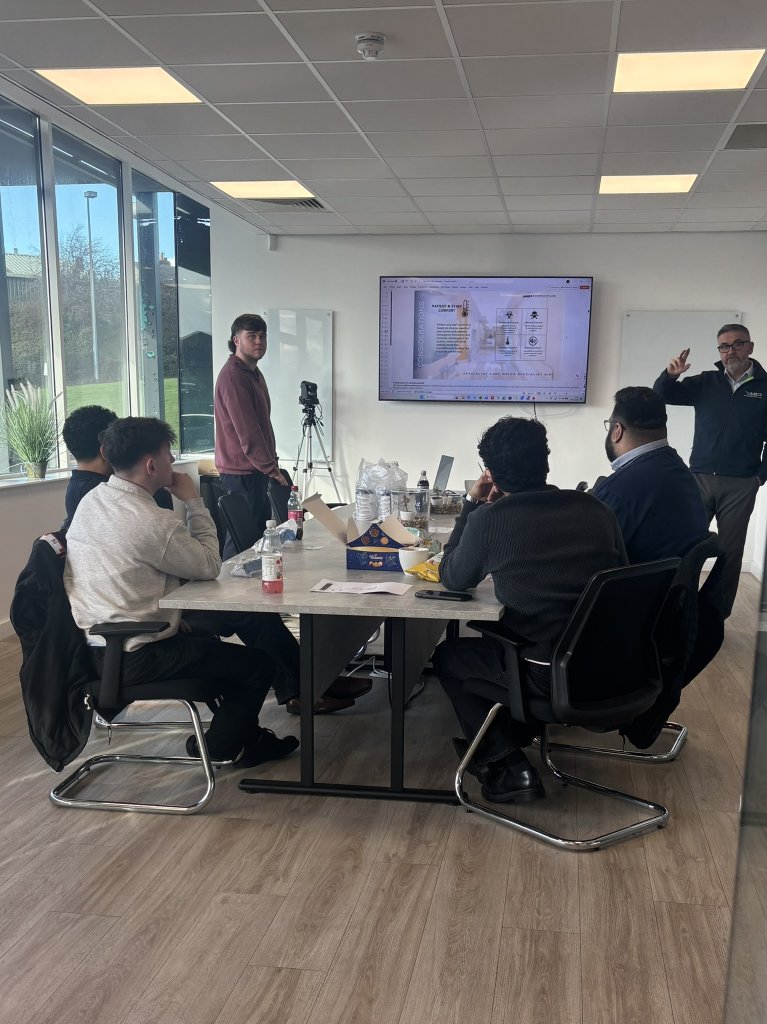
A group of our Yorkshire apprentices spent a day at Mansfield Pollard’s factory in Bradford, where they got hands-on with the equipment they’ll be specifying. The visit included building Air Handling Units on the factory floor, a CPD session on psychrometrics (which ties directly into their thermodynamics module at Leeds Beckett University), and some training on HTM-03 ventilation standards for healthcare environments.
Several AHUs in production during the visit were being built for live CAD21 projects, so the apprentices could see exactly how their schedules and specifications translate into the physical equipment.
Charlotte, who started her own apprenticeship at Mansfield Pollard nine years ago, arranged the visit because she understands how difficult it can be when you only get to learn from drawings alone. She said:
An apprentice who sees how a product is made gains far more than technical knowledge; they gain the practical understanding needed to design with confidence, competence, and credibility.”
The day also covered the professional side of specification writing, including fair competition, ethical procurement and the value of building relationships with local manufacturers. Mansfield Pollard are based in Bradford, and CAD21 has worked with them on projects across Bradford, Leeds and Halifax. Selecting suppliers close to site supports sustainable, local business growth, reduces delivery emissions, and improves future maintenance service availability.
Faris Ahmed, Mechanical Engineer, said:
The visit was very beneficial, seeing the equipment first-hand gave us a much better understanding of its size and scale, helping us relate our engineering designs to real-world applications.